
Global Energy Crisis 2026: Impact on Businesses, Economy & Future Trends
Introduction
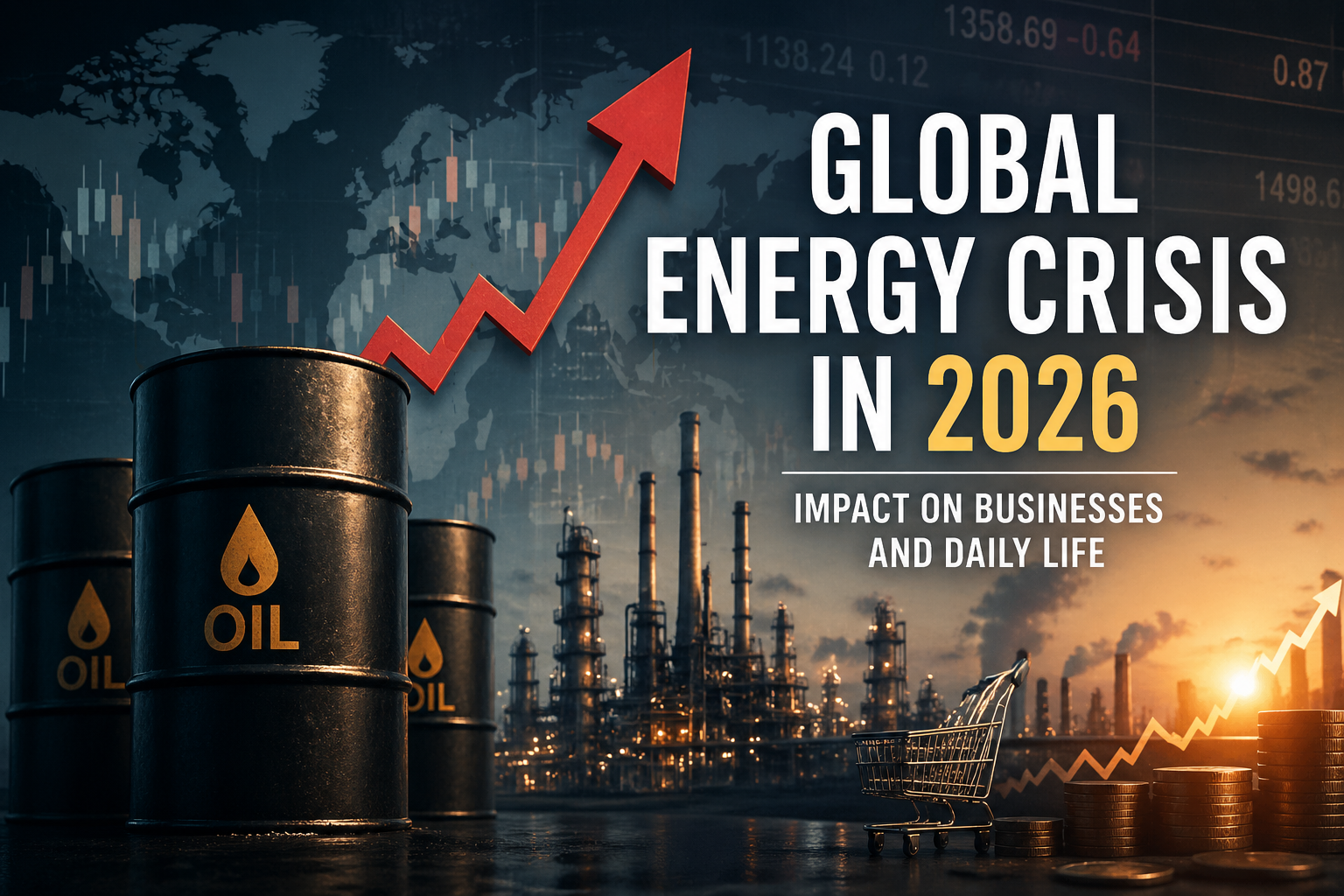
The global energy crisis 2026 is becoming one of the most critical challenges affecting economies, businesses, and daily life worldwide.
The world is currently facing a major energy crisis in 2026, driven by geopolitical tensions and disruptions in global oil supply. Rising fuel prices, inflation, and economic uncertainty are affecting both businesses and everyday life across the globe.
Understanding this crisis is important—not just for policymakers, but also for business owners, freelancers, and individuals who rely on stable economic conditions.
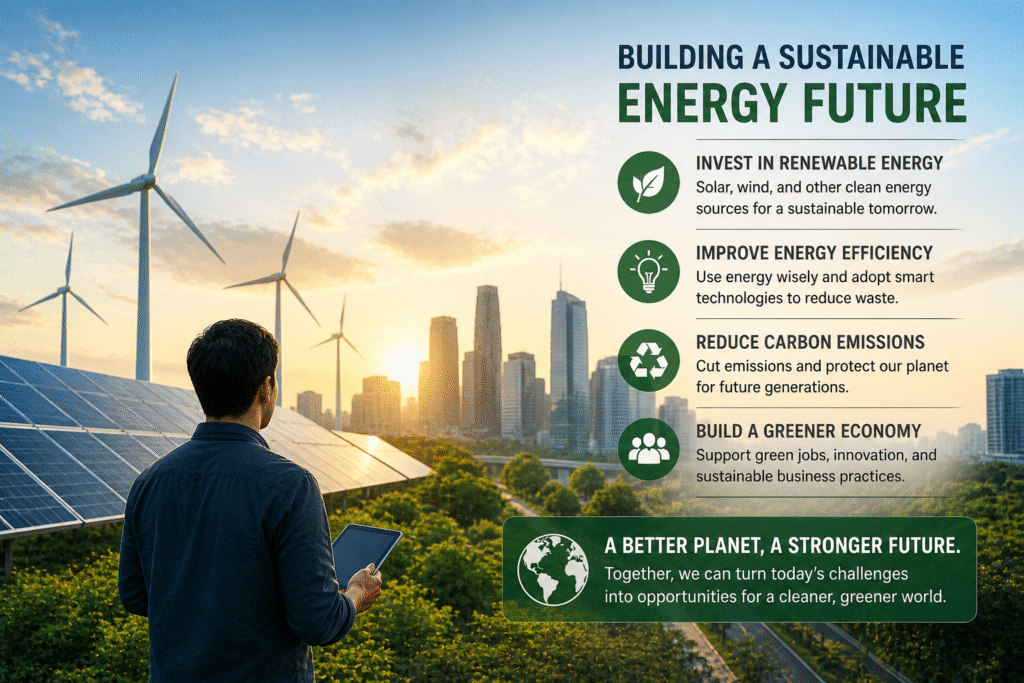
Building a sustainable future starts today—investing in renewable energy, improving efficiency, and reducing carbon emissions are key steps toward a greener, more resilient global economy
Impact of the Global Energy Crisis 2026 on Businesses
One of the main reasons behind the current crisis is the ongoing conflict in the Middle East, particularly involving Iran. This has disrupted oil supply routes, especially through the Strait of Hormuz—one of the most important global oil transit points.
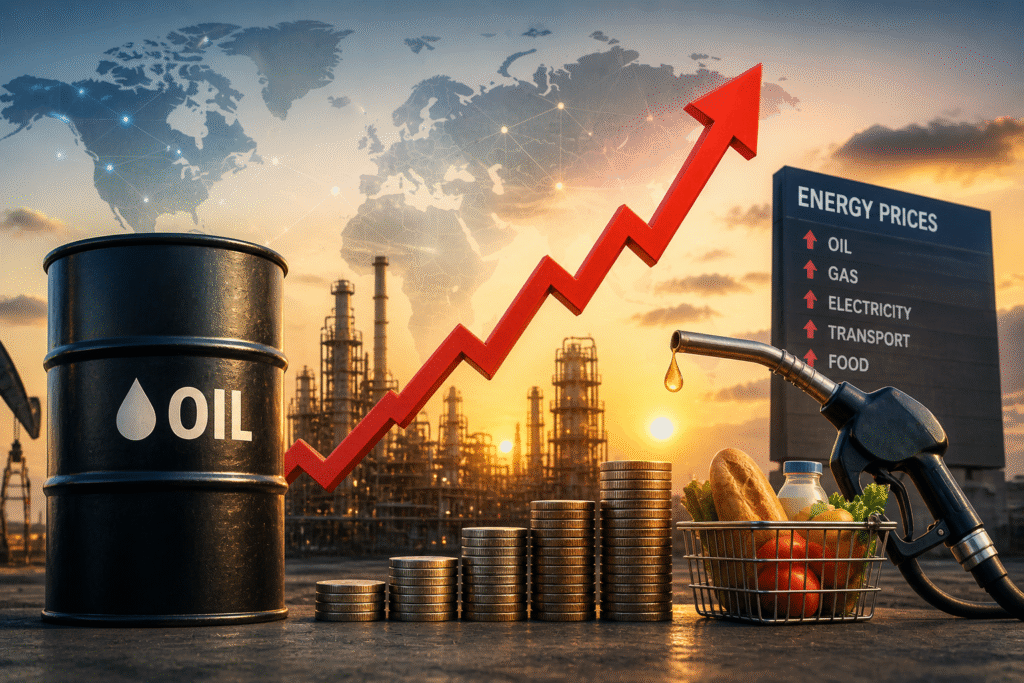
As a result, oil prices have surged significantly, with some reports showing prices nearing $120 per barrel due to supply disruptions and geopolitical instability.
Impact on Global Economy
The energy crisis is not just about fuel—it affects the entire global economy.
- Inflation is rising due to higher transportation and production costs
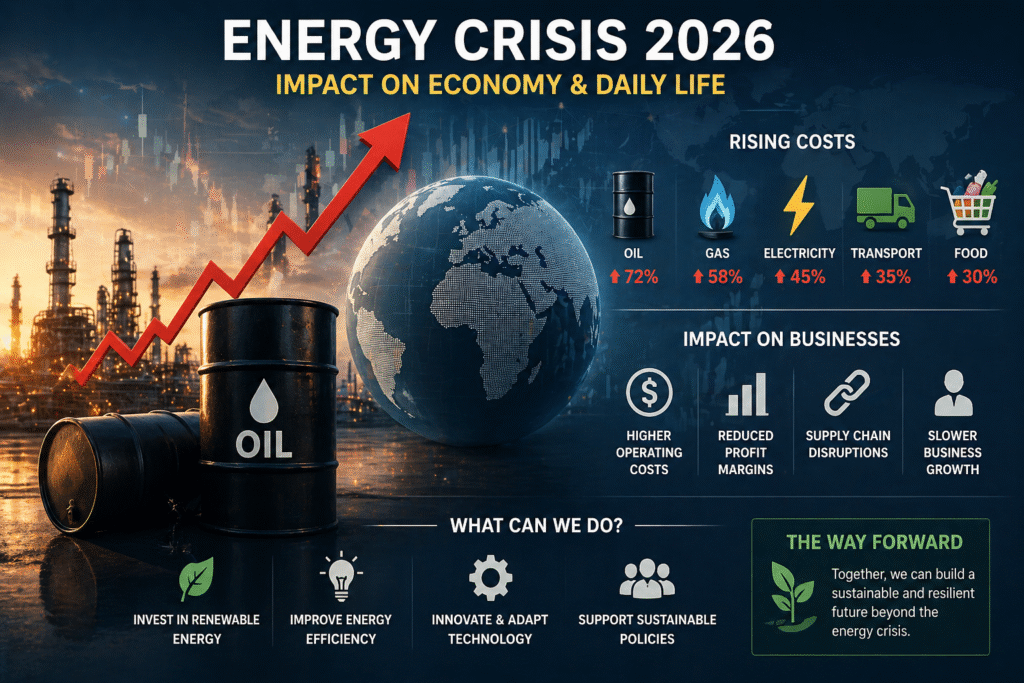
- Businesses are facing increased operating expenses
- Supply chains are becoming more unstable
According to global forecasts, energy prices could increase by up to 24% in 2026, putting additional pressure on developing economies.
Global Energy Crisis 2026: Key Causes
The global energy crisis 2026 is driven by a combination of geopolitical tensions, supply chain disruptions, and increasing global demand for energy. Conflicts in major energy-producing regions have reduced oil and gas supply, while economic recovery after recent global slowdowns has significantly increased consumption. Additionally, underinvestment in traditional energy infrastructure and the slow transition to renewable energy sources have created a gap between supply and demand. These factors together have led to rising energy prices, shortages, and uncertainty across global markets.
Global Energy Crisis 2026: Business Impact
The global energy crisis 2026 is having a significant impact on businesses worldwide, increasing operational costs and reducing profitability. Companies are facing higher electricity, fuel, and transportation expenses, which directly affect production and pricing strategies. Small and medium-sized businesses are especially vulnerable, as they have limited capacity to absorb rising costs. At the same time, the crisis is pushing organizations to adopt energy-efficient technologies and explore renewable solutions. Businesses that adapt quickly can reduce costs, improve sustainability, and gain a competitive advantage in an increasingly challenging economic environment.
How Businesses Are Affected
Businesses around the world are already experiencing the impact:
- Increased logistics and shipping costs
- Higher electricity and operational expenses
- Reduced consumer spending
For small businesses and freelancers, this means tighter budgets and more competition. Many companies are now focusing on cost optimization and digital transformation to survive.
Why Digital Businesses Are Growing
Interestingly, while traditional sectors struggle, digital businesses are growing.
Online platforms, e-commerce, and service-based websites are becoming more important than ever because they:
- Reduce physical operational costs
- Reach global audiences
- Provide scalable growth opportunities
This is why many businesses are now investing in professional websites and digital marketing strategies.
Opportunities for Entrepreneurs
Even during a crisis, opportunities exist:
- Start an online business
- Build a personal brand
- Offer freelance or remote services
- Invest in digital assets
Those who adapt quickly to changing conditions can benefit the most.
Future Outlook
Experts believe the effects of the current crisis may last for months or even years, depending on how global tensions evolve.
However, this situation is also accelerating the shift toward renewable energy and digital economies.
Conclusion
The 2026 global energy crisis is reshaping how economies and businesses operate. While it presents challenges, it also opens new opportunities—especially in the digital space.
Adapting to change is the key to survival and growth in today’s uncertain world.
The global energy crisis 2026 is not just a challenge but also an opportunity for innovation, sustainability, and smarter business strategies. Those who adapt early will gain a strong competitive advantage in the future.
Frequently Asked Questions (FAQs)
1. What is the global energy crisis in 2026?
The global energy crisis refers to rising energy costs, supply shortages, and increased demand for electricity, fuel, and natural resources worldwide. In 2026, it is driven by geopolitical tensions, inflation, and growing energy consumption.
2. Why are energy prices increasing globally?
Energy prices are rising due to supply chain disruptions, conflicts in energy-producing regions, high demand, and limited investment in traditional and renewable energy infrastructure.
3. How does the energy crisis affect businesses?
The energy crisis increases operational costs, reduces profit margins, disrupts production, and forces businesses to rethink energy usage and adopt cost-saving strategies.
4. What impact does the energy crisis have on daily life?
It affects everyday life through higher electricity bills, increased transportation costs, rising food prices, and overall inflation, making living expenses more expensive.
5. What are renewable energy solutions to this crisis?
Renewable energy solutions include solar power, wind energy, hydroelectric power, and other clean technologies that reduce dependence on fossil fuels and promote sustainability.
6. How can businesses reduce energy costs?
Businesses can reduce energy costs by improving efficiency, using energy-saving technologies, optimizing operations, and switching to renewable energy sources.
7. Is the energy crisis temporary or long-term?
The energy crisis may have short-term fluctuations, but long-term challenges will continue unless countries invest heavily in sustainable energy and infrastructure improvements.
8. How can individuals help reduce energy consumption?
Individuals can save energy by using efficient appliances, reducing unnecessary electricity usage, adopting solar solutions, and practicing energy-conscious habits.
9. Why is sustainable energy important for the future?
Sustainable energy helps reduce carbon emissions, protect the environment, ensure energy security, and create long-term economic stability.
10. What opportunities does the energy crisis create?
The crisis creates opportunities for innovation in renewable energy, green jobs, energy-efficient technologies, and new business models focused on sustainability.
According to the International Energy Agency (IEA)…: https://www.iea.org/
Check my portfolio and case studies to see how I help businesses grow online: https://hkmanik.com/portfolio/
Want to know more about WordPress: http://wp.org