
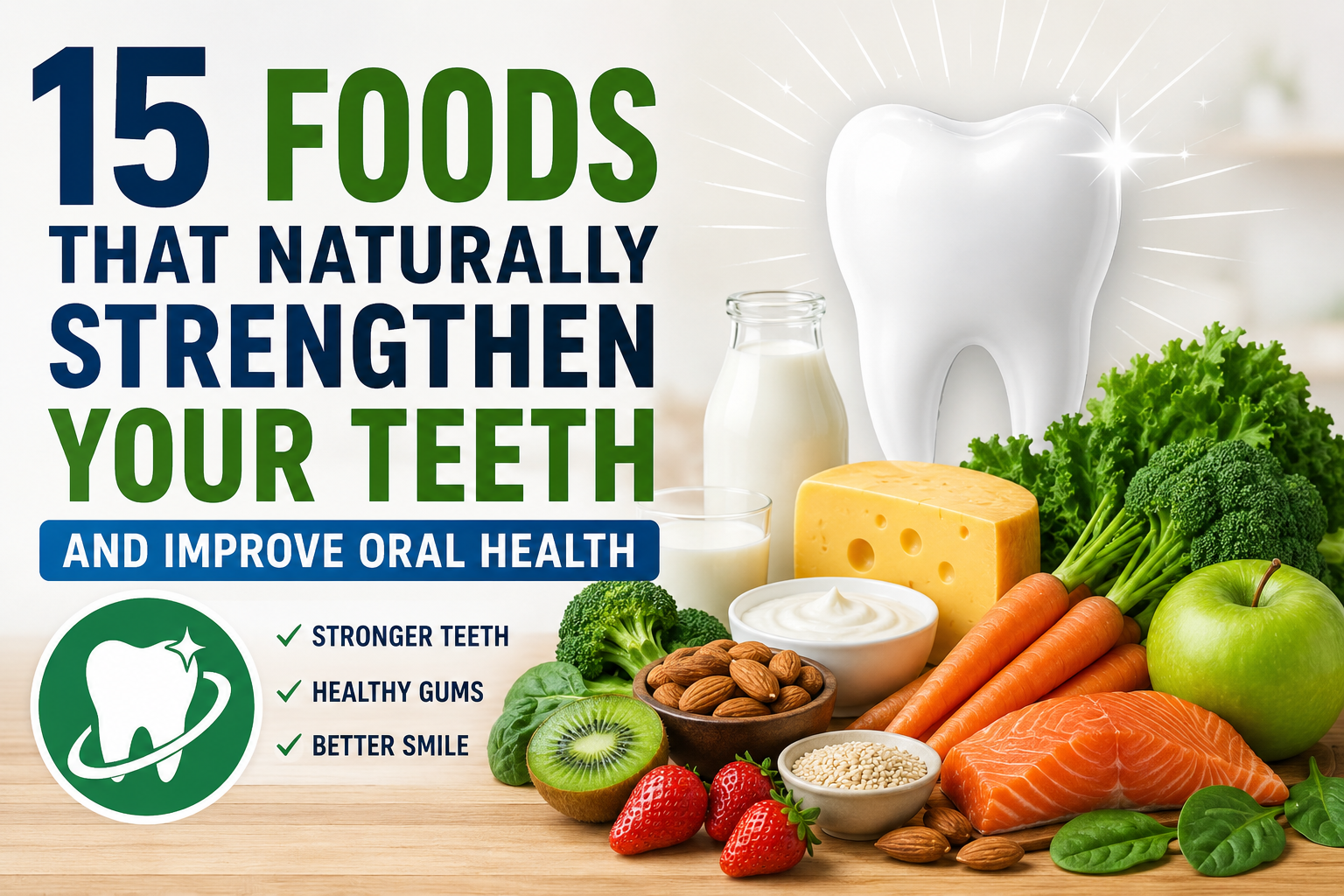
15 Foods That Strengthen Teeth and Improve Oral Health
Foods that strengthen teeth can provide important nutrients that support healthy teeth and gums. While brushing twice a day with fluoride toothpaste and cleaning between your teeth are essential for oral health, your diet also plays an important role in maintaining a healthy smile.
Certain foods provide nutrients such as calcium, phosphorus and vitamins that support normal tooth and bone health. Other foods can stimulate saliva flow or make a better alternative to sugary snacks and drinks. On the other hand, frequent consumption of sugary foods and acidic drinks can increase the risk of tooth decay and enamel erosion.
The good news is that you do not need a complicated diet to support your oral health. Many ordinary foods that are already available in your kitchen can be part of a tooth-friendly eating pattern.
In this article, we look at 15 foods that can support strong teeth and healthy gums, along with practical tips for making better food choices for your mouth. These foods that strengthen teeth can provide important nutrients while also helping you replace less nutritious snacks.
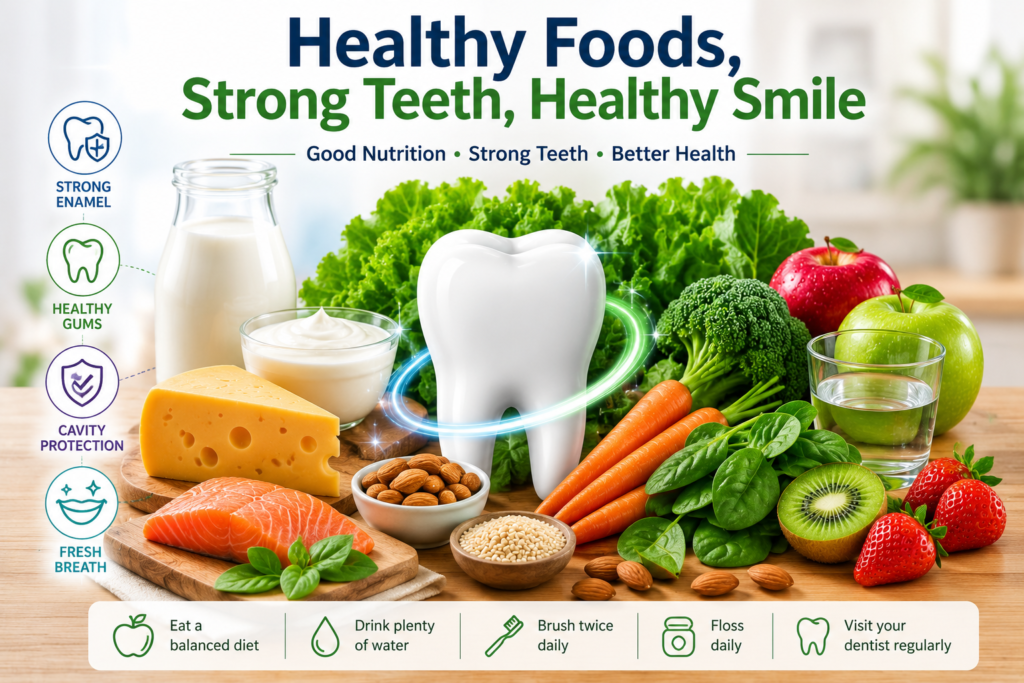
How Do Foods That Strengthen Teeth Support Oral Health?
Every time you eat, bacteria in dental plaque can interact with sugars and starches in food and produce acids. These acids can remove minerals from tooth enamel. When this process happens frequently, the risk of tooth decay increases.
Your mouth also has natural defenses. Saliva contains minerals such as calcium and phosphate that help replace minerals lost from enamel. Fluoride provides additional protection against tooth decay and can help stop or reverse early stages of decay.
This means that a tooth-friendly diet is not about finding one “miracle food.” Instead, it is about regularly choosing nutritious foods while limiting frequent exposure to sugar and acid.
These foods that strengthen teeth can provide important nutrients while also helping you make healthier choices instead of sugary snacks and drinks.
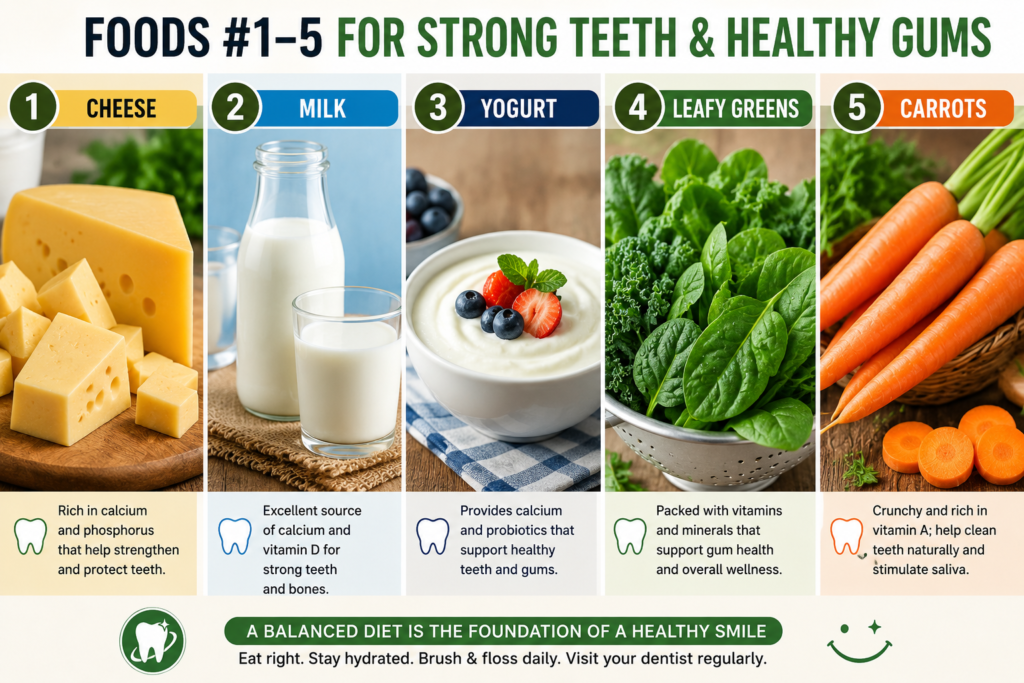
1. Cheese
Cheese can be a useful addition to a tooth-friendly diet because it provides calcium and phosphorus, minerals associated with healthy teeth and bones.
Cheese is also generally low in sugar compared with many sweet snacks. Choosing cheese instead of candy, cookies or other sugary snacks can therefore be a practical way to improve your overall eating pattern.
Some types of cheese can also be eaten conveniently as a snack or added to meals.
Try: A small serving of cheese with whole-grain crackers or vegetables.
2. Milk
Milk is well known as a source of calcium, which is important for maintaining healthy bones and teeth. Calcium is also a component of hydroxyapatite, the primary calcium-phosphate mineral found in tooth enamel.
Plain, unsweetened milk is generally a better choice for your teeth than sugary beverages such as soft drinks, sweetened juices and other sugar-containing drinks.
If you drink milk regularly, choose an option that fits your overall nutritional needs.
Tip: Avoid turning a healthy drink into a sugary one by adding large amounts of sugar or flavored syrups.
3. Plain Yogurt
Plain yogurt can provide calcium and other nutrients while being relatively low in added sugar when compared with many flavored dessert-style yogurts.
Choose unsweetened or low-sugar varieties when possible. You can add fresh fruit for flavor instead of choosing products with large amounts of added sugar.
Yogurt can be especially convenient for breakfast or as an afternoon snack.
Try: Plain yogurt with fresh berries, banana or a small amount of nuts.
4. Leafy Green Vegetables
Leafy greens such as spinach, kale and other green vegetables are nutrient-dense foods that can contribute to an overall healthy diet.
They provide vitamins, minerals and fiber while generally containing little sugar. Including vegetables regularly can help replace less nutritious snacks and contribute to a balanced diet.
While leafy greens should not be considered a treatment for dental disease, their nutritional value makes them a useful part of a tooth-friendly eating pattern.
Try: Add spinach to eggs, salads, soups or smoothies.
5. Carrots
Raw carrots are crunchy, naturally low in sugar and easy to eat as a snack.
Crunchy vegetables can also encourage chewing, which stimulates saliva production. Saliva is important because it helps neutralize acids and supplies minerals involved in maintaining tooth surfaces.
Carrots are therefore a much better everyday snack choice than sticky sweets or sugary biscuits.
Try: Keep washed carrot sticks ready for a quick snack.
6. Celery
Celery is another crunchy vegetable that can fit easily into a tooth-friendly diet.
Like other high-water, crunchy vegetables, celery requires chewing and can contribute to saliva flow. It is also low in sugar and can be paired with nutritious foods such as hummus.
Celery should not be viewed as a “natural toothbrush,” however. Eating it does not replace brushing or cleaning between your teeth.
Try: Combine celery sticks with hummus for a filling snack.
7. Apples
Whole apples contain natural sugars, but they also provide water and fiber. Eating whole fruit is generally preferable to drinking fruit juice because the fruit’s structure remains intact.
Chewing a whole apple can also stimulate saliva flow.
However, apples are not a substitute for brushing. They should be considered part of a balanced diet rather than a food that cleans your teeth.
Tip: Choose whole fruit more often than juice or smoothies.
8. Pears
Pears are another whole fruit that can be included in a balanced, tooth-friendly diet.
They contain water and fiber and can satisfy a desire for something sweet without relying on candy, cakes or other highly processed snacks.
As with apples and other fruits, eating the whole fruit is generally preferable to consuming it as juice.
Try: Have a whole pear with breakfast or as an afternoon snack.
9. Almonds and Other Nuts
Nuts can provide protein, healthy fats and various minerals. Some nuts also contain calcium and phosphorus, nutrients involved in maintaining healthy teeth and bones.
They can be a useful alternative to sugary snacks.
Choose plain or lightly processed nuts rather than varieties heavily coated with sugar. Also be careful with very hard foods if you have damaged teeth, dental restorations or jaw problems.
Try: Add a small portion of unsalted almonds or other nuts to breakfast or a snack.
10. Fatty Fish
Fish such as salmon, sardines and mackerel can provide important nutrients, including vitamin D in varying amounts.
Vitamin D plays a role in calcium and phosphate metabolism, both of which are important for mineralized tissues such as teeth and bones. Research has examined relationships between vitamin D status and dental health, although nutrition alone should not be presented as a treatment for tooth decay.
Fatty fish can therefore be a valuable part of an overall nutritious diet.
Try: Include fish in your meals a couple of times a week according to your dietary preferences.
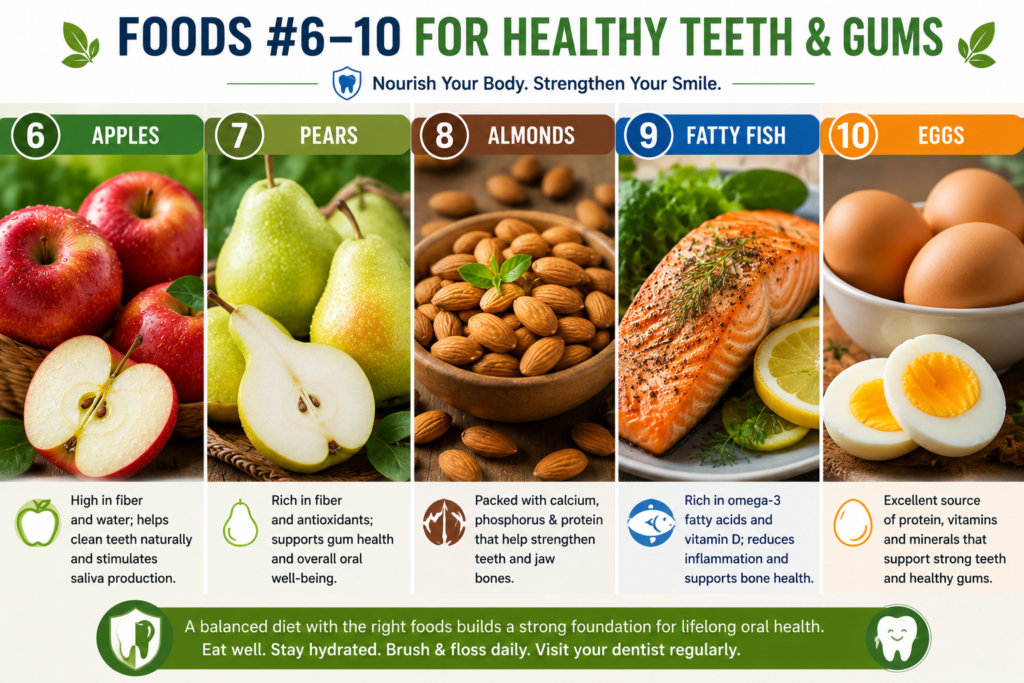
11. Eggs
Eggs are a convenient source of protein and several vitamins and minerals.
They can be especially useful as a replacement for sugary breakfast foods. For example, eggs with vegetables can be a more tooth-friendly breakfast than pastries, sweetened cereals or other foods high in added sugar.
A balanced diet supports general health, which is also important for maintaining healthy teeth and gums.
Try: Scrambled eggs with spinach and other vegetables.
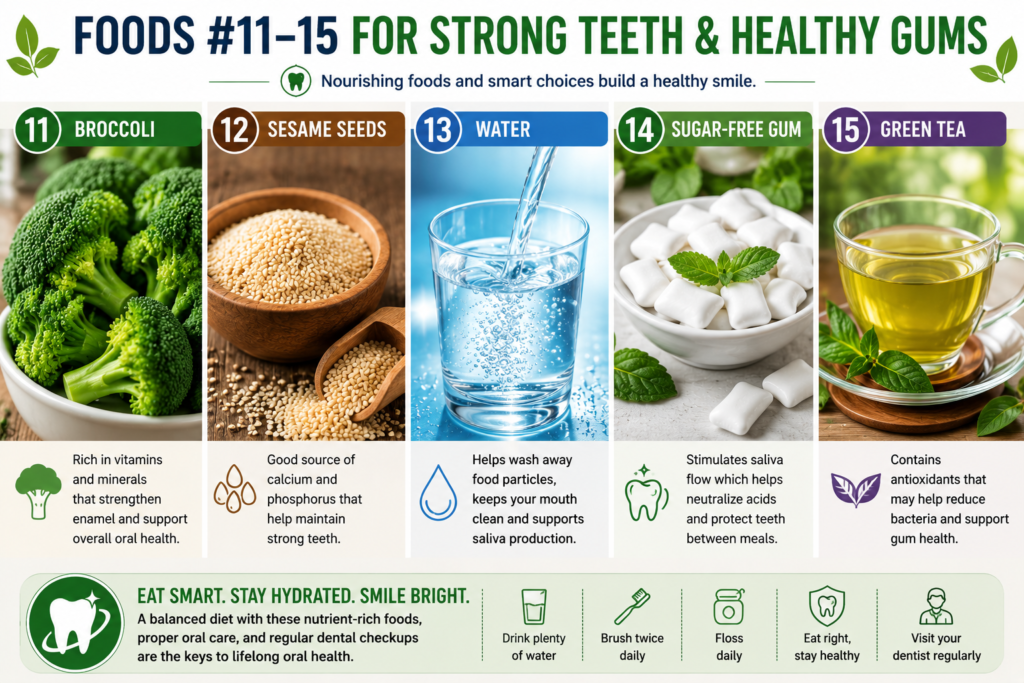
12. Broccoli
Broccoli is another nutrient-rich vegetable that contains fiber and several vitamins and minerals.
Like other vegetables, it can help make meals more filling while reducing the need for sugary snacks.
Raw or lightly cooked broccoli can also provide a crunchy texture that encourages chewing.
Try: Add broccoli to salads, stir-fries, soups or omelets.
13. Sesame Seeds
Sesame seeds can provide minerals such as calcium and phosphorus and can be easily incorporated into meals.
Sprinkling a small amount over salads, vegetables or other dishes is an easy way to add variety to your diet.
However, sesame seeds should not be considered a way to remove plaque or tartar. Only proper oral hygiene and professional dental care can address those problems.
Try: Sprinkle sesame seeds over salads or cooked vegetables.
14. Water
Water may be one of the simplest and most important choices for your teeth.
Unlike sugary soft drinks, water does not expose your teeth to sugar. Drinking water also helps maintain hydration and can help wash away food particles.
When fluoride is present at an appropriate level, drinking water can also contribute to fluoride exposure, which helps protect against tooth decay.
If you regularly drink sugary beverages, replacing some of them with water can make a significant difference to your overall oral-health habits.
Tip: Keep a bottle or glass of water nearby throughout the day.
15. Sugar-Free Chewing Gum
Sugar-free chewing gum is not technically a food, but it can be a useful addition to a tooth-friendly routine.
Chewing gum stimulates saliva flow, which helps the mouth clear food debris and neutralize acids. Some sugar-free gums contain sweeteners that are less likely to promote tooth decay than regular sugar.
The ADA notes that evidence concerning xylitol specifically is mixed, so it is better not to describe xylitol gum as a guaranteed cavity-prevention treatment.
Tip: If you chew gum, choose sugar-free gum rather than regular sugary gum.
What Foods Should You Limit for Healthier Teeth?
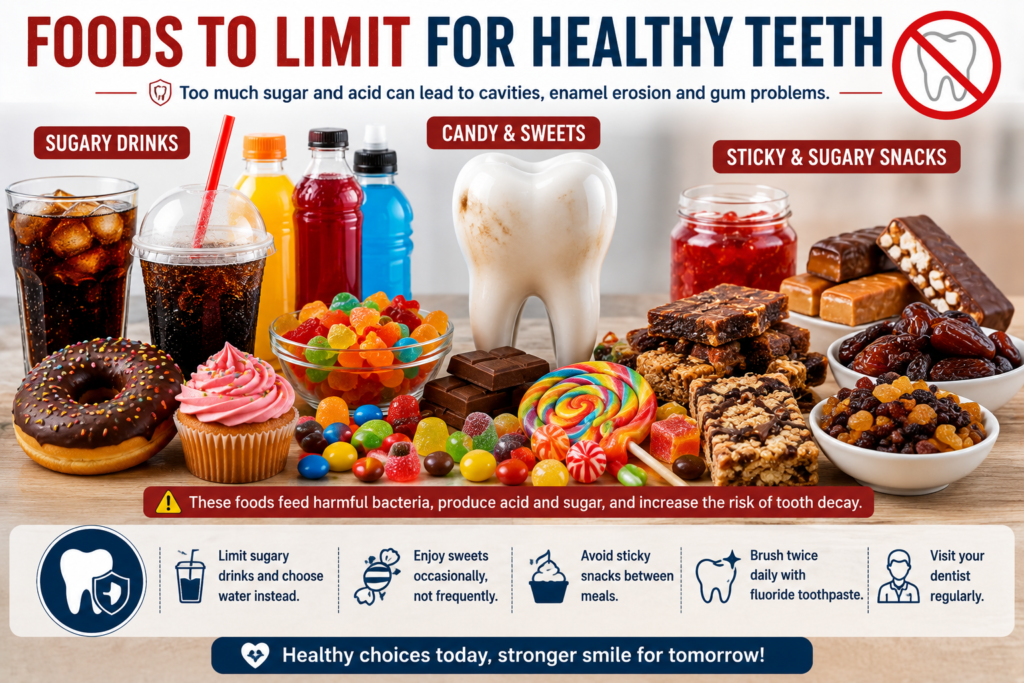
Knowing what to eat is only half of the equation. It is also important to understand which foods and drinks can increase the risk of dental problems.
Sugary Foods
Candy, cakes, cookies, sweetened cereals, chocolate and other foods high in free sugars can contribute to tooth decay.
The problem is not simply the presence of sugar. How frequently you consume sugary foods also matters. Frequent exposure gives plaque bacteria repeated opportunities to produce acids that attack enamel.
Instead of continuously snacking on sweet foods throughout the day, it is better to limit them and keep them mainly to mealtimes.
Sugary Drinks
Soft drinks, sweetened juices, energy drinks and other sugar-containing beverages can expose your teeth to both sugar and, in some cases, acids.
Drinking these beverages frequently can increase the risk of tooth decay and enamel erosion.
Water is usually a much better everyday choice.
Fruit Juice and Smoothies
Whole fruit can be part of a healthy diet, but fruit juice and smoothies can contain substantial amounts of sugar.
When fruit is juiced or blended, sugars become more readily available, and frequent consumption can be harmful to teeth. The NHS recommends limiting fruit juice and smoothies to a small glass of around 150 ml per day.
Sticky Snacks
Sticky sweets and dried fruit can remain in contact with teeth for longer than many other foods.
Dried fruit may be nutritious, but its concentrated sugar content means it is better eaten with a meal rather than frequently between meals.
Simple Eating Habits for Stronger Teeth
You do not have to completely change your diet to make your eating habits more tooth-friendly.
Try these simple habits:
1. Choose water more often
Make water your main everyday beverage whenever possible.
2. Eat whole fruit instead of drinking juice
Whole fruit retains its natural structure and fiber, while juice can deliver a more concentrated source of sugar.
3. Choose nutritious snacks
Replace candy, cookies and sugary snacks with options such as vegetables, nuts, cheese or plain yogurt.
4. Reduce frequent snacking
Repeated exposure to sugary foods can increase the number of acid attacks on your teeth. Eating structured meals rather than constantly grazing can be helpful.
5. Read food labels
Added sugars can appear in many packaged foods, including cereals, flavored yogurts, sauces and drinks.
6. Do not assume “natural” means tooth-friendly
Honey, syrups, fruit juice and dried fruit may sound healthier than candy, but they can still contain sugars that contribute to tooth decay.
Can Food Actually Rebuild Tooth Enamel?
This is an important distinction.
Foods can provide nutrients needed for normal health, including minerals involved in maintaining teeth. Saliva and fluoride also play important roles in the natural remineralization process.
However, food cannot rebuild a tooth after a cavity has created a hole in the enamel.
According to NIDCR, early tooth decay before a cavity forms can sometimes be stopped or reversed through remineralization. Once a cavity has formed, the damaged tooth generally requires professional dental treatment.
Therefore, it is misleading to describe any particular food as a cure for cavities.
Diet Is Only One Part of Oral Health
Even the healthiest diet cannot replace proper dental care.
For better oral health:
- Brush your teeth twice a day with fluoride toothpaste.
- Clean between your teeth regularly using floss or another interdental cleaner.
- Limit sugary foods and drinks.
- Drink water regularly.
- Avoid frequent snacking on sugary foods.
- Have regular dental checkups.
- See a dentist if you develop persistent tooth pain, sensitivity, swelling or bleeding gums.
Fluoride is particularly important because it helps strengthen enamel and prevent tooth decay.
Frequently Asked Questions (FAQ)
What is the best food for strong teeth?
There is no single “best” food for your teeth. A balanced diet containing calcium-rich foods such as dairy, nutrient-rich vegetables, whole fruits, nuts, protein sources and plenty of water is a better approach.
Does milk make your teeth stronger?
Milk provides calcium and other nutrients that support healthy bones and teeth. Plain milk is also generally a better beverage choice for your teeth than sugary drinks.
Are apples good for your teeth?
Whole apples can be part of a healthy diet. They contain water and fiber and require chewing, which can stimulate saliva. However, eating apples does not replace brushing and flossing.
Can carrots clean your teeth?
Crunchy vegetables such as carrots may stimulate chewing and saliva flow, but they do not replace brushing or interdental cleaning. Calling them a natural toothbrush would be misleading.
Is cheese good for teeth?
Cheese provides calcium and phosphorus and is generally low in sugar. It can be a useful alternative to sugary snacks as part of a balanced diet.
Is fruit bad for your teeth?
Whole fruit is not generally something that needs to be eliminated from a healthy diet. However, fruit juice, smoothies and dried fruit can expose teeth to more readily available or concentrated sugars, so portion size and frequency matter.
Is water good for your teeth?
Yes. Water is a good everyday beverage because it contains no added sugar and supports hydration. Fluoridated water can also provide fluoride, an important mineral for preventing tooth decay.
What foods should I avoid to prevent cavities?
You do not necessarily need to completely eliminate individual foods, but it is wise to limit sugary foods and drinks, especially frequent between-meal consumption. Sticky sugary foods and sweetened beverages deserve particular attention.
Can food reverse cavities?
Food alone cannot repair a formed cavity. Early tooth decay before a cavity develops may sometimes be stopped or reversed through remineralization, particularly with fluoride and good oral hygiene. A formed cavity requires dental evaluation and usually restorative treatment.
Final Thoughts
Strong teeth are supported by more than toothpaste and toothbrushes. The foods and drinks you consume regularly can also influence your oral health.
Calcium-rich foods such as milk, cheese and yogurt, nutritious vegetables, whole fruits, nuts, fish, eggs and plenty of water can all fit into a balanced diet that supports healthy teeth and gums.
At the same time, reducing sugary foods, sugary drinks and frequent snacking can help lower the risk of tooth decay. The American Dental Association emphasizes that both the type and frequency of sugar consumption matter for dental caries risk.
Remember that no food can replace fluoride toothpaste, regular oral hygiene or professional dental care. The best approach is simple: eat a balanced diet, choose water more often, limit sugar, clean your teeth regularly and visit your dentist when needed.
Choosing foods that strengthen teeth is one simple way to support your overall oral health. Choosing foods that strengthen teeth is one simple way to support your overall oral health.
A tooth-friendly diet is not about perfection. It is about making healthier choices consistently.
The American Dental Association provides additional guidance on nutrition and oral health.
The NIDCR explains that bacteria use sugars and starches to produce acids that attack enamel.
Read my other blogs.